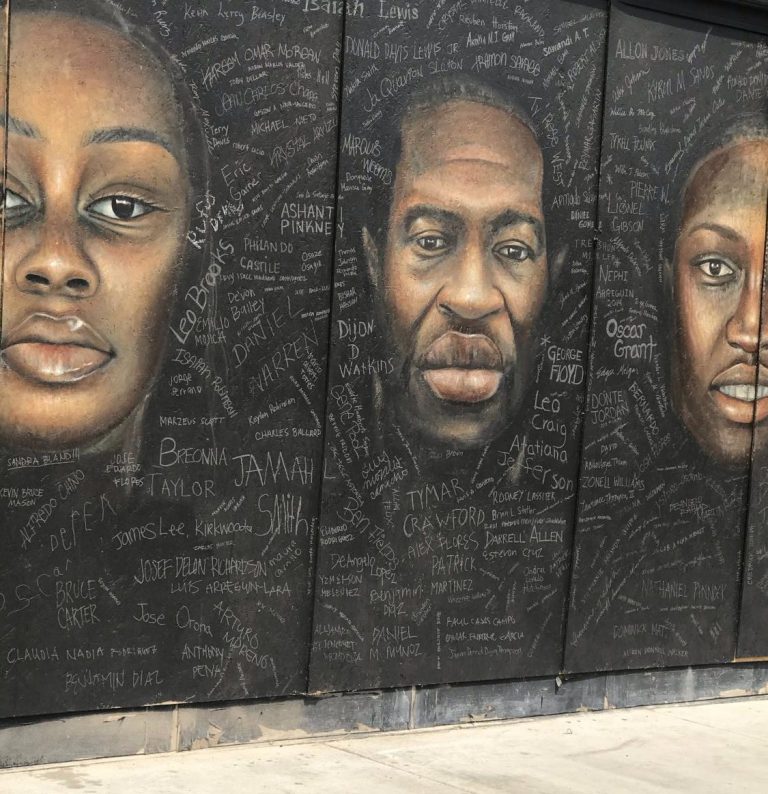


On the night of May 31, citizens of Long Beach watched as rioters looted and destroyed countless stores in Downtown Long Beach and other areas of the city. The looting came after thousands of peaceful protesters marched down Broadway making their voice heard and joining the millions across the country protesting the death of George Floyd.
These protests have been notorious for turning violent and some people are taking advantage of the large crowds to break store windows and loot both small and corporate businesses. Organizers of the protests in Long Beach wanted to make it clear that the looting seen in Los Angeles and other cities would not be tolerated at the protest. That tactic kept the protests peaceful but only for a short time. Around 5 O’clock the city of Long Beach declared a curfew which would be in effect from 6pm to 6am. This curfew was the push that sent many of the peaceful protesters home.
At the same time, the march took a turn to the Pike where stores like Nike, Forever 21, and H&M were looted. The chaos carried up to Long Beach Boulevard and Pine Avenue. Multiple news outlets were broadcasting the anarchy in the city throughout the night and some people decided to make a plan to take action and clean up the mess that was made.
The next day volunteers met at Jean Machine at 7am where they hit the streets and cleaned up what they could. Sam, the owner of Jean Machine was speechless and was in disbelief as he stood in his store surrounded by piles of his merchandise strewn on the floor. “I just want to go home and sleep,” he told volunteers inside the store. One of the volunteers directed me over to a cash register that had been smashed on the floor and told me how the register “served the community for countless years and provided clothing for hundreds of residents” and “provided clothing for anyone no matter their status.”
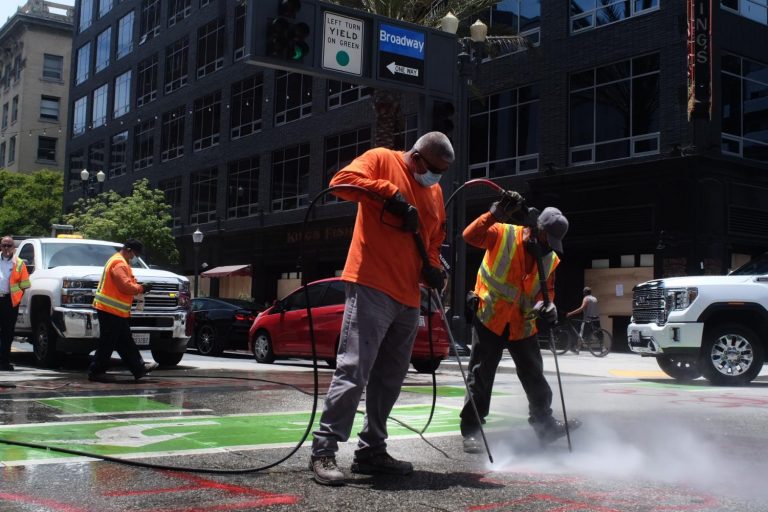
There were hundreds of people walking up and down the streets with brooms, dustpans, and garbage bags all sweeping up glass and picking up trash from the streets. Many of them with the same purpose, to help protect and rebuild the small businesses in the city. There were also clean-up crews in other parts of the city.
Curfews were set in the Long Beach for the second day in a row with the business district closing at 1pm and the rest of the city at 4pm in an effort to curb any plans for looting again.

Mental health, though often stigmatized, has been an issue since before Covid 19 shifted our everyday lives. Now, as stay at home orders displace us from our work and school environments and our everyday routine, mental health continues to be a top issue, especially among young people.
According to the World Health Organization, an estimated 10–20% of adolescents globally experience mental health conditions, yet these remain undiagnosed and untreated.
At least one in five youth aged 9–17 years currently has a diagnosable mental health disorder that causes some degree of impairment; one in 10 has a disorder that causes significant impairment.
Regardless of whether youth have a diagnosed or undiagnosed disorder, factors such as isolation, fear, and a lack of engagement with friends and peers can negatively affect a young person’s mental health and lead to stress and anxiety.
As social distancing, isolation, and online learning become the norm, how has this taken a toll on students’ mental well-being? Four Poly students were asked how the Covid 19 pandemic has affected their mental health personally. Here’s what they said:
Lizette Karina Ramon, Pace Senior

“It’s been so hard because I’ve had a lack of motivation for doing things. This whole situation is depressing, and the way our country is handling this pandemic is frustrating. My mental health has not been the best because I try my best to be optimistic but the way things are going, I don’t think they are going to get better soon. I’m just very tired mentally.”
Luis Cuahtli Sanchez, Justice Junior

“You lose a lot of motivation for doing school work just for passing, it’s like they’re simply giving us things to do and not giving things for us to learn.
But I’ve forced myself to get used to this because this pandemic will last a long while so it’s better to make it easier for me rather than harder.
But still….just knowing this virus is out there and there’s no vaccine just scares me, it can infect anyone, my friends, my family and even me. But there’s no point in being scared all day, there are still things that have to be done and we can only hope for the best outcome for everyone in the future and hope this ends soon. This has affected me quite a lot and it takes time to get used to it.”
Maya Morales, CIC Freshman

“The first few weeks were easy mentally. I was being lazy but I was happy. After about a month or so, I started to feel depressed. It went on for a few days and the whole time I didn’t leave my house at all. I didn’t want to go anywhere and for some reason, I would just listen to sad music and make myself even more sad and cry. So dramatic!
I think just being inside all the time and feeling a little lonely because my sister, my mom and my dad would work for so long, it messed with me a little. But I learned you just need to be a little more active and not simply do homework and stay in the house all day. Working-out or any physical exercise like a walk helps boost your mental health and makes you a little more productive.”
Lance Manago, Meds Senior

“I’m doing pretty good honestly. Online school is okay, but I just miss everything about waking up early and driving to school and seeing all my friends and teachers.
I would say it didn’t affect my mental health but rather affected my physical health. I’m an outside person, I love being outside and try to be active every day.
I was also looking forward to graduation and prom and grad night, it truly sucks what class of 2020 has to go through”
I learned that to get the streets to become less jammed, it takes a quarantine. During quarantine, life outside has been far from busy. The stores are emptier, fewer people are outside, and the streets are less crowded. For a learning driver, these are the perfect conditions for them.
After the announcement that school will move online, I have been able to set aside more time to learn how to drive. I have been practicing every day, in case preventive measures are set in place (that possibly could limit the time, and how often cars are able to go on the roads). After practicing for a month, I have a list of the perfect places for beginning drivers to start off:
Hopefully, if you have not learned how to drive, this comprehensive list will urge you to start. But remember, if you are under the age of 18, get a permit. The streets are less crowded and it is much more navigable to start learning
Before you start learning, I will caution you, there are a lot of police cars (so follow the law! No speeding!). I assume that they are only there to patrol any mass gatherings, so don’t be worried– if you are lawfully learning there is nothing to be concerned about.
Music always makes the atmosphere much livelier, and what more do we need in a quarantine than that? Despite being alone, music fills the quiet space. Below I compiled a list of song recommendations. Each is separated into its category, describing an emotion to uplift you during quarantine:
When you need to feel a little bit happier:
When you need motivation and more energy:
When you need to relax and chill out:
When you want to have an existential crisis:
Despite all the chaos happening globally in 2020, music remains as our constant and faithful companion. And the same is true for the NY-based alt-pop duo, The Influencers.
About a month ago, I delved into a research project concerning the roots of the band and shared my findings on my YouTube channel. But my curiousity grew even more intense as I came out with more questions than I had at the beginning of my research. And on April 17, 2020, I had the privilege of sitting down to chat with Steven Suarez and Evan Yan over Zoom and get answers to these questions that I’ve been sitting on for a while.
So, would you like to start off by introducing yourselves?
[Evan Yan]: Sure, I am Evan Yan, and I am the singer and co-songwriter for The Influencers.
[Steven Suarez]: And my name is Steven Suarez. I am the other member of The Influencers; I play the drums. I also do backup vocals, producing, and a bunch of other things.
How long have you guys been playing together? How did you start the band?
EY: Well, it’s funny — Steven is the brother of one of my childhood friends going back ’til second grade or something. He’s the younger brother of Paul Suarez. So I went to school with Paul, and we were friends… I played music — I played piano and was in band, but I didn’t play guitar or anything. Paul got me into guitar and largely, rock music and everything classical; classic rock and things like that. And when I would go over and play music in his basement, Steven was there, [laughs] and Steven would run downstairs and play drums. And that’s how I met Steven…
SS: Yeah, so continuing what Even was saying: Evan had first picked up the guitar during that time period, and probably a few years later really practiced by himself and got some skills and finally reached out to me. I’d been playing drums at that point towards the beginning of high school performing. So he reached with an idea to basically put some songs together, and at this point we hadn’t even established a band name. I remember we were still working on that, but he definitely wanted to work on serious projects. He sent me three demos…. The first demo was “Bleeding Colors,” and another one was “Up to Our Knees” and then “Champ,” so those were some of the first three songs that we ever worked on. We did it through a separate engineer in the beginning, but those were some of the songs that we got together, jammed, and then eventually recorded. And it just continued from there. We really took it seriously, came up with the name, The Influencers, and it’s been Evan and I since day one.
So, The Influencers. Where did that name come from?
EY: That is a tough question that I still can’t quite remember the exact story. Oh man, I think at the time — this was before “influencers” were like a thing on Instagram and all the social media and everything, and it was just emerging as kind of a name. And I vaguely remember that we wanted to make music — I mean, not like too different than any other kind of music — but we wanted to make music that was influenced and inspired by very different artists and genres and kinda funneling them into something else to create something new. And you know, that’s not different than anything else or any other musician, but we wanted to make that a part of who we were and really put that upfront.
SS: Yeah, I think it’s very ironic that the term, “the influencers” has become so prevalent now. When we first started, it was a very peculiar name and people were very critical about it. I know Evan knows that there were plenty of people along the way that suggested we change our band name. And we stuck it out, and we were really content with it. One documentary in particular that was going around during that time period that talked about the “influencers” and people who do that kind of thing — and we really settled on that once we saw that documentary. And also having a band name with the word “the,” and you know, “The (something)” like The Beatles or [The] Rolling Stones. We wanted to fall in that category; just the way our taste and our interest in music was, and hopefully, our legacy.
Yeah, up with the greats. I see The Beatles up on your wall, Evan, behind you.
EY&SS: [laughs]
The last thing we saw from you guys (if I’m correct) was “Slingshot.” How did it feel writing that song, working on the music video — what exactly was going through your mind working on that process?
EY: For this song we kind of changed up everything that we did. Previously to that, we were working in the city at a studio and also at my old studio, and in between “Lightning” and “Slingshot,” I moved into a new space, and Chris Rizzo (our producer); he was very busy at the time. So he was plugging into the song, but a little bit limited, so it was a whole different kind of feeling and different experience. So largely, he helped shape the song in the beginning, and we kind of figured out everything else and came up with the song a little differently this time.
SS: Songwriting for us — every song is different, but there are some common themes that you could find throughout each song, especially the newer ones. “Slingshot” was different in that it was in a new space, so you’re gonna get a different vibe for the music. But I know Evan and I originally, day one with that song sat down with our guitars, ironed out the chord progression, settled on a key, settled on some parts — how we wanted to transition the song. But even then, it wasn’t set in stone, and it really never is until you really get to recording: having stuff, taking stuff away, seeing what works, what doesn’t. And that song — if you heard some of the early demos, it sounds a lot different than what the final product was, and in a good way for us ‘cause we’re pretty happy with how it came out. And that was really just a lot of layering, so we started with a demo, added some percussion sounds, and then some synthesizers, and then eventually throughout a process of two months…two to three months we shaped it to become the song that it is now.
EY: Yeah, that was a very painful song to record, ’cause we recorded…“Dancing on Graves” by ourselves, and then “Whitewater” we recorded by ourselves like we had done in the past. But then when Steven’s friend was introduced to us (Chris Rizzo), we recorded with him at his studio out in the city in Manhattan. And we recorded three songs with him, I think, right?
SS: Yeah.
E: “Desert,” “Fallin’,” “Lightning.” And then all of a sudden when he got a little too busy, we had to record everything ourselves. So we kinda had to supervise it for a living… But I’m self-taught, so. [laughs]
SS: But, I mean, the great thing about Rizzo, though, is he’s always willing to help us out, and there’s specific parts in that song that Evan and I can give him all the credit for — like actual tracks and things you can hear that he added which I think really helped make the song pop. But the song structure and the idea, and the lyrics, and the chords are really just Evan and I. We are pretty responsible for how that song came out.
So two months? That’s quite a long time. Does it normally take you that long to get a song out or is it like longer? Shorter?
EY: I think that’s about right in our current — right? In our current run of things.
SS: Yeah, it depends. Ideally, you don’t want it to drag on too long. But in between our third album, Valhalla, and “Whitewater”’s release — but kind of during our hiatus (when we were getting the ball rolling again) — Evan had started writing “Whitewater,” which that process was probably the longest of any song.
EY: [laughs]
SS: Where it started out as an idea, a demo…“Okay, let’s start recording it,” and then we had a recording, but we ended up scraping it and recording it — or kind of like reshaping it to become the song it is now, thanks to Conner (who’s our record label executive), and he really inspired us to make it sound the way it does. So to answer your question: yeah, on average it’s usually at least a month, maybe two to three. But some songs just…you gotta work with them and let them work themselves out, no matter how long it takes.
EY: And a lot happens. So you know, we’ll start with a demo and then — like right now we’re at that point at that phase with a new song — and we’ll sit on it for maybe two to three weeks while we iron out the structure and listen to it again to see if it’s a good enough song. And then as we move into the other phases, the weeks just fly by. That’s usually what happens. [laughs]
About your guys’ hiatus, do you feel that your songwriting style or just the feeling of playing in a band has changed from the time that you started to the time after your hiatus?
EY: I definitely do. I think… We both kind of did our own things: Steven was in a few bands, or played with a few bands also while engineering and recording and producing. And I turned… I mean, I largely stopped music to the point where my studio was really, literally collecting dust. But I was recording a few people like Matt Grabowski, and helping produce them. And in doing that, I think it really helped me to take a new point of view from music which I’d never experienced before. So it really shaped my songwriting being kind of that person outside of the box looking in as opposed to being the person sitting in there trying to figure things out…
SS: My end of the difference between pre-hiatus and post-hiatus — those first three albums I really can’t take any credit for engineering besides maybe ideas and you know, “Let’s try this, let’s try that.” But when it comes to sitting on a computer and actually working on the tracks, I was not responsible for that for those three albums. So hiatus comes, and I had studied audio engineering (or, began to study), and I also began an internship at Cove City Sounds Studios in Glen Cove (our hometown). And I learned a lot about really just recording, and what it takes to work on a song, and how to operate the digital audio works station. And so now, post-hiatus, Evan and I both co-engineer although I feel very comfortable in that position, and I have a very critical ear when it comes to that. And I like the think that you can hear the difference between the music that we originally had versus now where we’re a little bit more… We’ll kind of scrutinize it, really try to make it sound radio-friendly instead of just, you know, saying, “Okay, it’s good, it’s done.”
EY: Yeah, we rushed the previous stuff out quickly. Not really rushing, but it was just — we were moving at a lot of speeds and you know I tend to be a control freak with things. So those first three, I really was trying to figure out, do everything by myself while Steven was learning. And then this time around, I mean I feel like I took a backseat to most things. And you know, I did write the song at the beginning, kind of part of it, but I really am more interested in letting what other people that we work with (we work with a bunch of different people) kind of have their feedback and their ideas to change and make that song grow as opposed to just having one vision in the beginning.
Yeah, I totally see the difference between the music. So, I do have a burning question from my research of you guys. You mentioned that Danny Casale did make a video that made you guys pretty much skyrocket. And in that video, “High Five Journey,” there was a third member of The Influencers. Was that an official member that played with you guys or was he a guest or something?
EY: He was a guest. And we’ve had a bunch of guests throughout the years, including Danny. So yes, he was a guest. He played on one of our songs on our first album, “#75248” and he did a bunch of guitar solos and things. I think he did a few more tracks, but yeah. [laughs]
SS: To really answer that question, the “third member” is probably like three or four different people… Like I said, it’s been Evan and I…since the beginning. Although just to name a few, like Evan mentioned my older brother, Paul: he was playing gigs with us at one point, so he was our bassist while Evan was on guitar. And so he wasn’t as dedicated, so he never really stuck around. Mark is the guy who’s in the High-Five video; he did the guitar solos on “#75248.” Danny did some guitar work on Valhalla…
EY: He also wrote some songs, too, yeah. [laughs]
SS: A good friend of mine, Nick, who did bass on the second album… It’s just, it’s really hard if you’re in a band to find someone who shares the same vision and really wants to, you know, “follow the leader” and work as a team and really get on board with it. It’s just something that Evan and I really at this point are pretty committed to. We just haven’t… And so we’re not seriously looking, but we haven’t really came across the right person who really fits our vision. Although, we’re more than happy to collaborate with anybody and just see what they have to offer.
EY: And I think that Conner from our record label — when we signed with him he helped us kind of establish the fact that…embrace that we are a duo. And I suppose to a band… Something that we struggled with previously, trying to find a member to fit — to play live and kind of then embraced the fact that…stop thinking about playing live and make the music, embrace who you are and things like that. And now between like Rizzo…helping me, and even my cousins are helping me and things like that. So we kind of all create The Influencers at the end of the day.
I like how you said, “Stop thinking about playing live,” ’cause if you think about, like The Beatles: they were big before when they were playing the live shows, but it wasn’t until Sgt. Peppers’ when they said, “Okay, we’re not gonna play live anymore” that they really just skyrocketed their career and all their sales went up.
EY: Exactly. ’Cause you can limit yourself so much worrying about how to play something live, but I think in today’s climate and everything how music is made, most people don’t even think about that, really. So we are totally on board with creating all kinds of stuff. “Desert” had…what, like 120 tracks on it?
SS: [laughs]
EY: [laughs] And we’ll never be able to play that live!
SS: I don’t think that’s a problem. I’m more than happy with how “Desert” came out, and I think you find a lot of groups or bands now (and this is really acceptable) to have your recording and to play live, but your recording and your live performance really don’t have to sound exactly alike ’cause the fans are happy enough to see the artist doing what they do best. And you know, hearing — let’s say — Evan’s voice or my drums…in my opinion, that’ll be enough for them as long as we’re really trying to entertain them and you know, something artistic and something that they’d like to hear.
Is there a specific single, track, or album that you’re specifically proud of?
SS: I’m extremely proud of all of our latest releases — “Desert” in particular ’cause that’s the one with the most streams. And it’s just crazy how they all came together.
Going off the numbers, dude. [laughs]
EY: [laughs]
SS: [laughs] But if you really dissect them and figure how we came into making each one sound the way it does, it’s really cool ’cause you can’t imagine what the final product is gonna sound like in along the way until it’s actually done. And one thing that I do is every time we release a new song, it makes me appreciate the previous song more. So, coming off “Whitewater,” which I was extremely proud of, we came out with “Desert,” so it made me appreciate “Whitewater.” Flash forward to now “Slingshot,” I’ve been listening to “Lightning” nonstop, because that’s…I mean, you gotta separate yourself as an artist from what you’re making to really take in in as [an] artistic image instead of each part, and dissecting it, saying what you could do better or worse…things like that. So I would just say, to answer your question, all of our 2019 releases are my prized possessions. [laughs]
Well, if you can tell, I’m always listening to Lightning nonstop. [laughs]
EY: [laughs]
SS: Hearing you talk about it, too, made me even step back and say, “Wow, we really…” [laughs]
EY: That was an interesting one. I think that it’s… It’s interesting because I have my favorites for different reasons — like for example, “Fallin’” I think is one of my favorite kind of guitar-acoustic, vocal-melody riffs I’ve ever done. But it’s funny because when it was released, not that many people liked it as opposed to “Desert” or ‘Whitewater” or other songs. So, you know, everyone has kind of their own thing. But it’s very interesting to see when we get comments or things like that on our videos or music, see how people gravitate towards different things. When you think it’s something great — “This is the best one” — and then everyone likes something else. [laughs]
Is there anything that we can expect from you in the near future?
EY: Yeah, I think we’re working a new song now… We’re kind of having fun with the singles, to be honest. Because you know, in today’s music industry and everything, large albums (unless you’re like a really big name — heavy hitters that are dropping two albums a year or something) I think people like singles more because you can stay…I don’t want to say relevant, but in their ear more consistently as opposed to every two years or something with ten songs that drop. So I like singles. I mean, like maybe an EP or something like that, I kind of like the pace of just dropping things.
SS: I agree with that. The singles…I couldn’t imagine in the early days saying that we’d be releasing one single at a time, but you can hear the results that — when we put all of our energy and focus into one song instead of seven or eight songs (maybe more), that we’re not as scattered and we really stay true to what we’re working on. We also do have some videos on backlog. We have a back-to-work acoustic video that we’re kind of sitting on right now. I think we’re just waiting for some final touches on that. And you know, with everything that’s going on, we might have delayed the release for that reason. But we’re always happy to come up with new content, new videos. Our main focus right now is definitely on the next song, so we’re working on a demo right now; we’re in the early stages of our next song.
Alright. Thank you so much, guys, for sitting down with me, especially in how crazy the world is right now. [laughs]
EY: [laughs] Well thank you, Madeline! …I think what you’re doing is great, and diving into music like that. Especially in a time like now where people wanna…I mean, there’s only so much you can do in a day, and listening to music and understanding music and really thinking about — instead of just listening to it for the fun of it, but digging into it is something that is invaluable. …
And we can follow you on Instagram, Twitter, YouTube…?
EY: Yes, Instagram, YouTube is a good place to follow us, and I think that you’ll be seeing some new videos coming out soon.
SS: Yes…hearing someone talk about our music like that really pushes us to keep going. As much as we love doing it, the fan validation really sends us twice as far…
Follow The Influencers on social media:
Instagram (@ theinfluencersband)
Twitter (@ ZeInfluencers)
YouTube (The Influencers)
Spotify, Bandcamp, Amazon Music

In the wake of many businesses being shut down and many workers finding themselves without work, the City of Long Beach in partnership with the Long Beach Community Foundation started a Coronavirus Relief Fund. The money raised is going to assist low income workers, small businesses, and those immediately in need.
The Coronavirus fund began accepting donations on March 18, 2020 and since then the fund has raised over 1 million dollars as announced by City officials on Monday morning, April 13. “We are seeing unprecedented levels of compassion during this crisis and I am so proud of the work that is being done through the non-profits to support our community,” Mayer Robert Garcia said in a Monday morning announcement.
According to a statement from City Officials, about half of the money donated ($475,000) has been dished out to 31 non-profit organizations, many of those organizations serve to feed and house those in need during this crisis.
The City of Long Beach said nonprofits with a valid 501(c)3 are able to request a grant for up to $20,000. Eligible organizations include those who:
Larger grants may be given to nonprofits who serve an exceptional amount of individuals.
While there are many other funds setup at both the federal and state level, this fund puts the people of Long Beach first in the list for receiving much needed aid.
There are many ways to donate:
Text: Text “SupportLB” to 501-55 and follow instructions to donate
PayPal: Use PayPal online or on a mobile device and donate to @SupportLB
Credit Card: Visit https://longbeachcf.org/ and fill out a secure online form
Check: Mail a check donation to the Long Beach Community Foundation, 400 Oceangate, Suite 800, Long beach, CA 90802. Be sure to add Long Beach Coronavirus Relief Fund in the memo section of your check

The date was March 4. Robert Garcia made the decision to place Long Beach in a state of emergency. At that time there were no known cases of coronavirus in the city. The declaration of a state of emergency was made to allow for the coordination of agencies across the city, streamline staffing, accelerate emergency planning, allow for future reimbursement by the state and federal governments and most importantly, allow for the means to help educate the public in proper hygiene and how to act in case that COVID-19 popped up in the community.
In an outbreak, things can change in a matter of weeks, days, even hours. Staying ahead and preparing for the inevitable is the only way to properly manage such a situation. “We need to be ready and continue to increase preparedness throughout the city,” City Health Officer Anissa Davis said in the city’s press release that day. “The global crisis continues to evolve on a daily basis.”
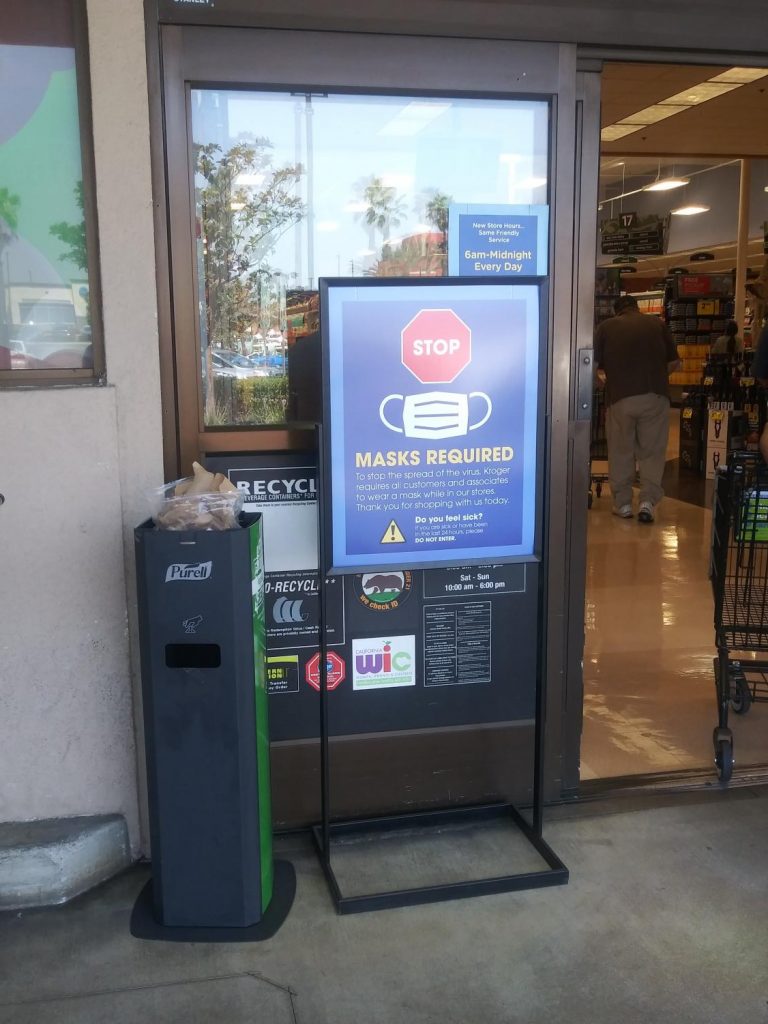
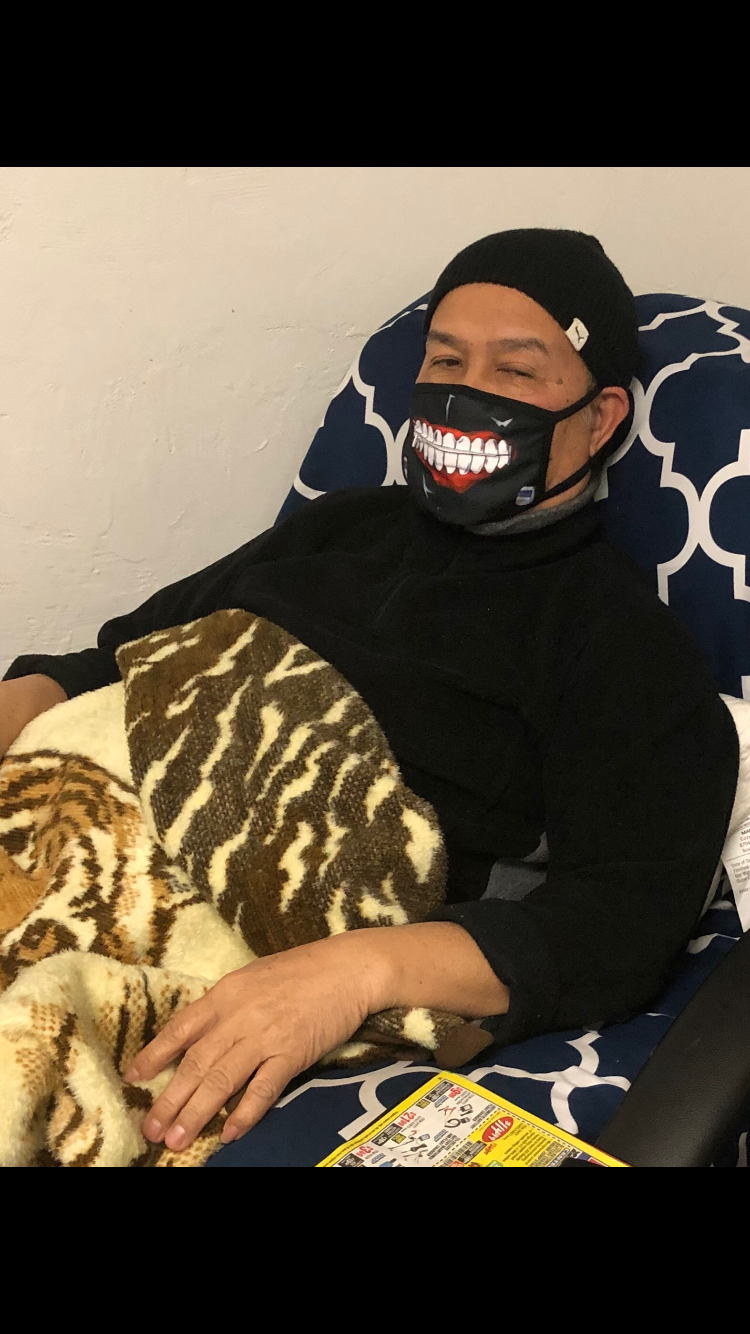
Since that announcement, the whole situation has changed. Streets once swarming with life now remain desolate. Businesses deemed by the city as nonessential have been forced to close, restaurants have closed all dine in operations and workers wear face masks per the order placed by mayor Garcia ordering all essential workers to wear masks that cover their faces. An order that does not only apply to workers but also customers.
Restaurants, grocery stores, pharmacies can now deny you service if you are not wearing a face mask or cloth facial covering.
All public schools have been closed for the remainder of the school year and many schools (including Poly) have since moved to online learning opportunities, “virtual enrichment” as they call it. AP exams will take place in your own home and the thought of graduation and walking the stage is an uncertainty for the whole class of 2020.
These are all things that on March 4 would’ve sounded absurd to anyone living in Long Beach. And now, a little over one month later, we find ourselves in this new reality.
As of now, the only purpose of the National Guard in Long Beach is to help provide humanitarian aid to two of the shelters set up to help homeless citizens during this crisis. 50 members of the National Guard 325th Company arrived on April 10. While they are dressed in their camouflage uniform, they remain unarmed while in Long Beach.
After the city’s emergency declaration on March 4, local National Guard officials offered assistance and support services. The city sent out a formal request on April 2 to them.
As well as offering services to the homeless shelters, National Guard personnel will also be assisting medical staff at the RAC (photographed above), monitoring the physical distancing of crowds as well as logistical support for local officials.

As of April 8, Long Beach has a total of 256 confirmed cases of Novel Coronavirus, a number which Mayor Garcia says is expected to rise exponentially in the coming weeks. All businesses deemed non-essential are closed down and those that are still open, such as grocery stores, restaurants or banks are putting tight restrictions on human interaction such as placing markers at entrances and checkout lines at six foot intervals to promote social distancing.
Hospitals and healthcare facilities are rushing to prepare for an unavoidable rush of patients. Friday, April 3, Mayor Robert Garcia sent out an email to city residents explaining the steps these hospitals are taking in preparation. The convention center has already been converted into a 100 bed hospital and there is speculation of even using the Queen Mary as a medical facility.
“We are doing everything we can to prepare for the patient surge in our hospitals in the weeks ahead,” Garcia said.
Even with all the measures in place, cases of the virus are still surging in the United States. Recently, the US passed both Italy and China in confirmed cases topping at a staggering 300,000 people testing positive. California has seen 14,000 of the 375,000 cases in the States, even though Governor Gavin Newsom has been strict on enforcing a new “safer at home” initiative and encouraging citizens to remain inside their houses only allowing leave for work and essential shopping.
Due to prior limitations to testing, the number of COVID positive patients was a mystery but as a new drive through testing site opens at the Pacific LBCC campus, the number of confirmed cases are likely to rise.
But that doesn’t mean there’s nothing you can do about it.
Mayor Garcia offers this advice: “If you want to help us stop the emergency that could face our hospitals in the weeks ahead, we need you to stay home if possible and social distance.”