Category: Opinion

  • SalesGiving

    Thanksgiving is supposed to be all about food, family, and gratitude. These days it seems like it is about scoping out Black Friday sales and camping out in front of Best Buy.
    In the past few years it seems like companies have taken Black Friday sales to the extreme with most stores opening their doors for sale at 6 P.M. on Thanksgiving Day. I may be a traditionalist, but isn’t the point of a Black Friday sale that it takes place on Black Friday? In recent years, companies have started creeping back the hours; first moving to 4 A.M., then midnight, then they gave up all pretenses and opened at 8 P.M. Thanksgiving Day. However, it seems like they have gone as far as they can go because last year they started opening at 6 P.M. and this year will probably be the same.
    Along with the encroaching Black Friday sales is the new practice of skipping over Thanksgiving entirely. Most stores do not even bother to wait until after Halloween to put out the Christmas decorations. I do not know many small children, but I imagine that, especially in Southern California where the leaves only change color from lack of water, the dearth of fall decorations might confuse them. In the monochromatic area of Southern California, the only semblance of fall we had were the Pumpkin Spice Lattes and fake leaf decorations.
    I find it equally depressing that the holiday we decide to forget is the holiday made to celebrate thankfulness and family and instead we focus on holidays where we beg strangers for candy or we receive presents from family. Then on Thanksgiving, when we are finally forced to accept the holiday, we spend the day camping out in the cold so we can buy things at low prices.
    Feel free to stand in line for stores decorated in tinsel, but at the very least remember that Thanksgiving is supposed to be about turkey, pumpkin pie, and celebrating our good fortune.

  • Missouri’s Misery

    I have read endless articles about the daily injustices black communities face. All fill me with a pang of sadness, but more importantly, a desire for empathy and change.
    The recent events at the University of Missouri (“Mizzou”) complete yet another chapter in the American black narrative, one marked by unimaginable suffering.
    It is sickening to know that people’s demands for safety are addressed only by putting said safety at stake through protests and hunger strikes that often turn sour. We believe that the administrations at our schools have our best interests at heart, but for many, that is not the case.
    The now ex-President of Mizzou, Tim Wolfe, did not act on the requests and pleas of his students, all of whom had legitimate grievances. Students complained about feeling unsafe on campus and alienated by the school’s racially disproportional makeup.
    Several black students protested about their unmet needs in the homecoming parade. They halted Wolfe’s vehicle temporarily, but that is the furthest extent of their success.
    His apathy is a reflection of how a majority of Americans feel about racism. This lack of understanding and its ramifications disgusts me.
    At the same time, I harbor immense guilt for the prejudices I carry. I am an extension of the collective racist pysche that continues to define American society.
    To be black means to live in a world where you are barred and prevented from living normally. This is the current state we find ourselves in fifty-one years after the Civil Rights Act of 1964.
    Such is the situation that black students tried to alter at Mizzou.
    To some degree, they were successful. The university’s president and chancellor soon left their posts amid boycotts by the football team and certain professors.
    Sadly, once-explicit forms of racism have transmuted into implicit (and often subconscious) means of discrimination, all of which function through continued insularity.
    Even if a safe space is created for black students, the opposition’s views are not eliminated. Prejudice is rooted so deeply into our minds that we are often incapable of recognizing them.
    To this day, I still discover how my biases manifest themselves in small actions and thoughts. By writing this piece, I do not feel absolved of any guilt or shame. Rather, I feel a stronger sense to confront my judgments and do my part in this fight for equality.
    I stand with the students of Mizzou and all others who face discrimination. Granted, I can’t do much, but in working towards gaining a better understanding, my desire for change burns even more feverishly.

  • Pray For Humanity

    Pray For Humanity

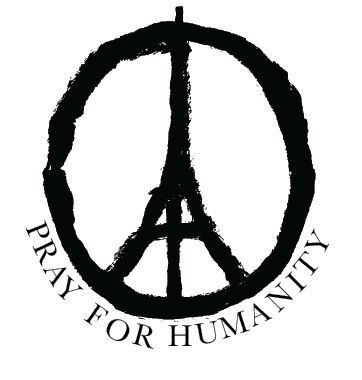
    In case you have had your head in the sand for the last week, Paris was stricken by a horrific series of terrorist attacks on Friday, November 13. The attacks, claimed by the Islamic State of Iraq and Syria (ISIS), took a total of 129 lives, including Cal State Long Beach student Nohemi “Mimi” Gonzalez, who was spending a semester abroad at the Strate College of Design.
    Six locations in Paris were targeted by the terrorists, including the Bataclan concert hall where the California rock band Eagles of Death Metal were performing, the Stade de France where France and Germany were having a friendly soccer match, and several restaurants where gunmen unloaded round after round upon innocent patrons.
    As a response to the attacks, Paris officials raided an apartment Wednesday, November 8, where suspects were believed to be staying, leading to two deaths and eight arrests.
    The day after the attacks, ISIS leader Abu Bakr al-Baghdadi sent the western world a terrifying message: “Let France—and those who walk in its path—know that they will remain on the top of the list of targets of the Islamic State.” He has warned that these attacks are “the first in a storm.”
    These threats, whether empty or not, are terrifying, and will inevitably lead to an intensification of anti-Arab and anti-Muslim sentiment, as well as an increased international fear of the Syrian refugees.
    The sick irony in hiding behind media-influenced fear of Muslims is perfectly explained by Reading Football Club player Dan Holloway, who tweeted, “To people blaming refugees for attacks in Paris tonight: Do you not realise [sic] these are the people the refugees are trying to run away from…?”
    People who instinctually generalize the entire Muslim population of the Middle East as Islamic extremists need to take a step back and realize that these ISIS militants are a miniscule minority; only 0.01% of Muslims in Europe have gone to fight with ISIS.
    Responses by countries across the globe are admirable, including Barack Obama’s speech stating that the crisis in France was an attack not just on the French people, but on all of humanity.
    However, despite the social media outbursts of #PrayForParis and large public awareness of the attacks, it seems that terrorist attacks in third world countries will continue to go unnoticed.
    On Thursday, November 12, the day before the Paris attacks, the streets of Beirut, Lebanon, were struck with a double suicide bombing killing 43 and wounding 200 others. It was the worst outbreak of violence since the end of Lebanon’s civil war in 1990. The country is devastated, not just by the deaths of its people, but also by the rest of the world’s ignorance.
    Because Lebanon neighbors  Syria, the world tends to ignore its crises, assuming constant chaos in Lebanon merely because of its geographic location.
    I am not suggesting that the horrors of Paris are unimportant, or do not deserve sympathy and support. I am proud to see all my friends add the Paris Flag Filter to their Facebook profile photo. I just want us all to realize that the Western World is not the only place affected by terrorism; other countries suffer similar attacks on humanity that are ignored by the majority of the world. Eighty percent of all deaths caused by terrorists take place in only five countries: Iraq, Afghanistan, Pakistan, Nigeria, and Syria.
    Tens of thousands of people die this way each year. That is unacceptable; the world has to unite if we wish to fight against the killing of civilians all over the globe.

  • IDs? ID Even Necessary?

    IDs? ID Even Necessary?

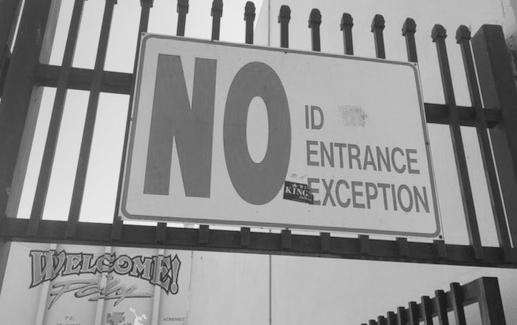
    It’s 7:27 A.M., I had three hours of sleep, and I’ve faced my inevitable fate that I am about to fail my Calculus quiz. I make my way from the parking lot to the Jackrabbit/Atlantic gate, dragging my feet, half asleep, trying to ignore how happy the kid in front of me sounds. I get to the gate and damn – my ID. I left it somewhere in the depths of the mess that is the backseat of my car. I whip out my sophomore-year ID (that somehow I have managed not to lose) from my backpack’s front pocket and wave it to the person who believes that he is the all-mighty guardian of the wonderful kingdom that is Poly. It has worked before; it is the way I have entered this palace since the beginning of the school year. However, this time it did not go over so well. I was stopped in my tracks and my ID was confiscated and ripped from my too-tired-to-function hands. (I was actually emotionally attached to that ID and am upset that it was forcibly taken.)
    After I was denied entrance into the holy land by the high and mighty ID Police, I was directed to get a temporary ID at the main gate. I did not argue the fact that I pass through that gate every single day, or complain that the girl before me passed through the gate without showing her ID because the guard knew her. Instead, I turned around and walked onto Jackrabbit Lane towards the main entrance only to be greeted by a long line of ID-less criminals waiting to be granted permission into the academic Promised Land.  I stood in the line for a split second, but chose to try my luck at the other gate. I was expecting that gate to be guarded, too, given that the first guy was stricter than Donald Trump at the Mexican-American border. But to my (not so much) surprise, it was not. I was actually more upset than relieved that it was not guarded because I was turned around at the first gate for not having my ID and was then expected to wait in a line to be given a temporary ID by a person who seems to hate this newly-enforced rule as much as students do.
    If students are expected to respect this rule, I suggest Poly does not enforce it merely half way. These temporary IDs are a waste of time and money. If the administration is actually worried with campus security, I expect them to have the gates guarded at all times that they are open, including during zero period and after school. Additionally, if you want me to willingly dig into my backpack to show you my ID, ask everyone for their IDs. The only injustice I hate more than partially enforcing rules is exceptions to the rules. So I argue that these ID checks at the gates are not only unnecessary but absurd and it makes students want to enter school even less than they already do. I once saw a kid leave campus because he was denied entry without his ID and apparently had one too many warnings. So please do not make it harder than it already is for students to go to school. It is seven in the morning, so cut us some slack.

  • The National Holidays Epidemic

    The National Holidays Epidemic

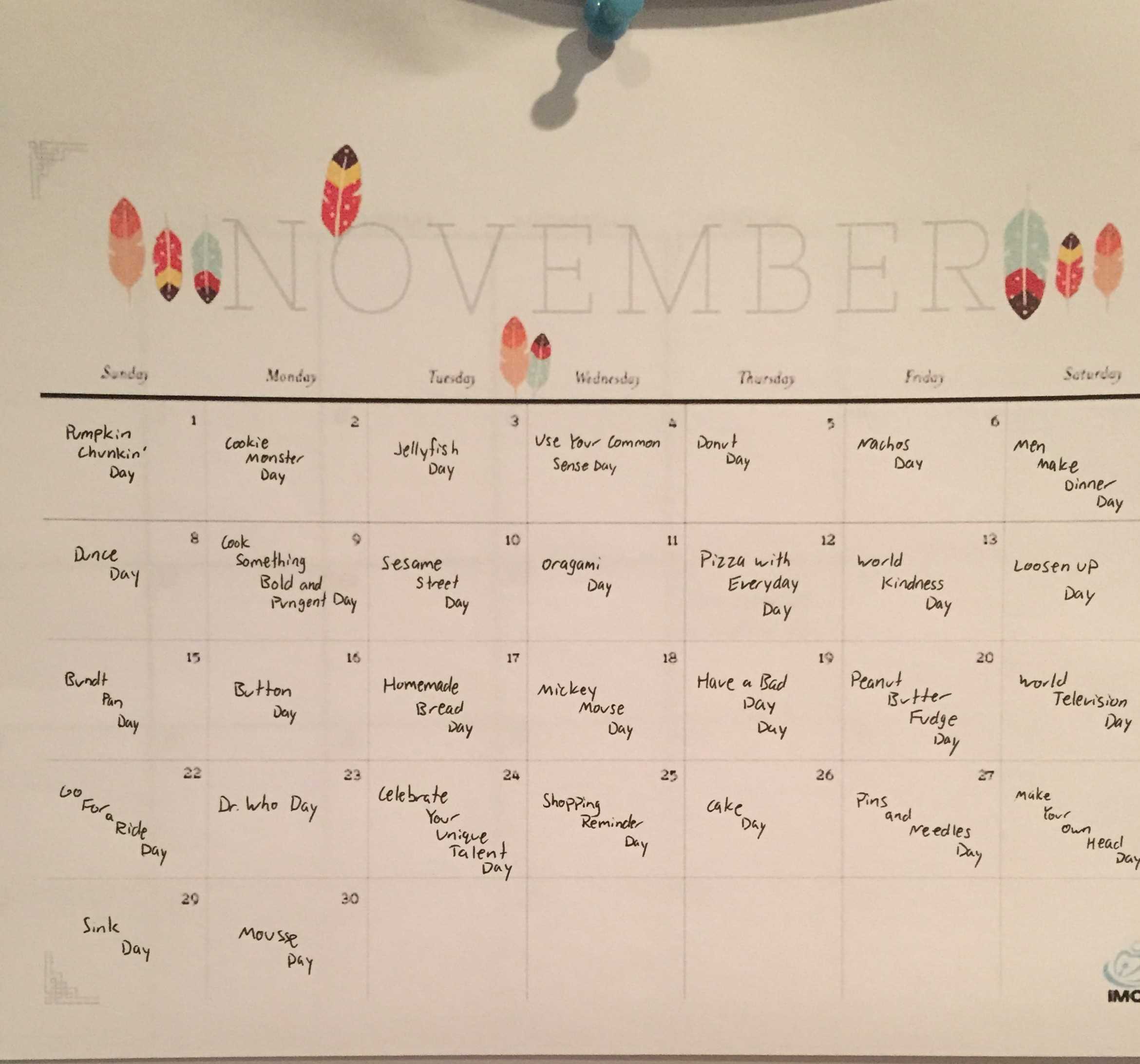
    Leave Zucchini on Your Neighbor’s Porch Day is celebrated August 8. Take Your Plants for a Walk Day is on July 27. Answer Cats’s Questions Day falls on January 22. We are currently in an epidemic of random and unnecessary holidays. The good news is that civilization will most likely survive. However, society is a different matter.
    Surprisingly, these holidays have been around for longer than we may think. Most of them were started by a corporation as a marketing scheme or an excuse to celebrate their hard work. The National Watermelon Association started National Watermelon Day so long ago that none of the employees know the exact year of its conception.
    While the tactic behind some holidays is very obvious, such as Hostess Twinkie Day, others are not as straightforward, like Cook Something Bold and Pungent Day. Along with marketing, there are also some inspirational days such as Use Your Common Sense Day, Read a Book Day, and Good Neighbor Day, which I deem more useful and needed than Brandied Fruit Day.
    The most common place to see these holidays is, of course, on social media. Many people use these random days and pop-up hashtags as an excuse to post pictures of them and their cat, them eating a taco, or them wearing lipstick. These people could not possibly post a picture of them and an octopus on the day they went to the aquarium- that would be weird and uncalled for. Instead, they keep the picture and wait until an occasion calls for the post and eventually Octopus Day comes around and gives them the excuse.
    These people fail to realize that once Octopus Day comes around, everyone is tired of seeing octopi. Last week was National Cat Day and my feed was infected with pictures of the little devils. Posting about what you want when you want is far better than waiting until everyone and their grandmas post the same thing.
    I admit some of these holidays are a brilliant marketing strategy and I commend the person who originally thought of the idea. However,  these “holidays” subtract from the real holidays that have actual purpose and history such as Rosh Hashanah, Ramadan, and Easter. The main thing that pop-up holidays celebrate is American consumerism.
    One part of me loves our ability to celebrate the random things and congratulates everyone’s passion for these unnecessary celebrations, and I realize that the worst these holidays do is endorse the takeover of social media. However, the other part of me shudders that some person in our society actually celebrates Underwear Day.

  • If You Want to Talk, Come Find Me

    If You Want to Talk, Come Find Me

    Look around at any given moment and you will most likely see people attached to their phones, eyes fixated on screens, drool possibly spilling from their mouths.

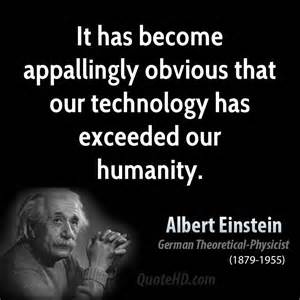
    Though it probably seems like everyone has had a touchscreen baby since the prehistoric era, the birth of the smartphone we know and obsess over today only occurred about eight years ago. Revolutionizing the way we communicate, portable technological devices have taken over the lives of an estimated seventy-three percent of people in the U.S. alone. This all seems dandy, but with technology comes the rise of social media, also known as the reason eye-contact and genuine conversations freak you out.

    Social media is defined by the Merriam-Webster Dictionary as “forms of electronic communication in which users create online communities to share information, ideas, personal messages, and other content.” In reality, social media has become a platform for superficial ideals, obnoxious thoughts, and unrealistic expectations, creating competitive undertones amongst youth with a quick double tap.

    If you didn’t post it, did it actually happen? People are eager to document everything now, from a tornado coming straight towards them to a deadly fight.  Obsessed with capturing every single moment, we fail to live in them.

    People underestimate how much influence social media has on them. Likes and followers are closely associated with popularity, commonly thought to be the same thing. Women’s self-esteem is often dependent on the amount of likes, followers, and retweets they receive, comparing themselves to ‘Insta-famous’ sex symbols that attract millions of followers. The concept of followers and likes has morphed into the determining factors of self-worth, making people desperate to reach the unrealistic goals of perfection that social media community enforces.

    The way we interact and develop relationships with each other has been permanently altered by social media. We live in an age where before you even meet someone you can know an outrageous amount of information about them. Privacy is a thing of the past; nowadays, our closest friends and family, phone numbers, and even our addresses are available to anyone who can click search. Gone are the days of meeting your true love by chance; we now scroll through snapshots of potential partners as if flipping through a magazine. Bold comments of heart-eye emojis on your crush’s latest post translate into awkward exchanges passing one another in the hall.

    Where do we stand as a society by allowing social media to determine our self – worth and moral values? One might say social media is a creative outlet that allows people to network and make “friends”, but I strongly disagree. Some recognize social networks as nothing more than a tool to enhance their social status and express themselves. Others rely on the volume of positive responses they receive from friends and foes alike as a barometer of their beauty and value amongst their network of peers. If this is only the beginning of the “feeding-frenzy,” imagine what the future holds. If this world is going to be one of faux online personas and Twitter fights, I’m not interested.  If you want to talk, come find me below the rock I live under.

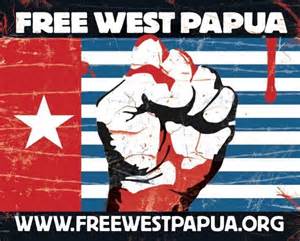
  • Free West Papua Campaign

    Free West Papua Campaign

    West Papua is part of an island above Australia, and I’m guessing most people reading this have never heard of it.

    European interest in West Papua and its vast natural resources has existed since the 1500s. In the 1600s, the Dutch claimed sovereignty over West Papua and remained there until the mid-twentieth century. The Dutch formally withdrew from the country with the intention to grant West Papua their independence in 1962.

    The people of West Papua have no geographical, ethnic, or cultural ties to Indonesia, but despite that, the country began asserting authority over West Papua  immediately  after the Dutch withdrawal. Through U.S.-led negotiations, Holland and Indonesia signed The New York Agreement, which included the
    infrastructure for a voting process known as the Act of Free Choice. What should have been a vote under U.N. supervision of  800,000
    became 1,025 Papuans who voted for Indonesian rule at gunpoint under the threat of great harm to themselves and their families.

    The campaign to win West Papuan independence is called “Free West Papua,” and the campaign website claims it strives to “educate and engage the American public and government around the history, issues, and challenges of the indigenous Melanesian citizens of West Papua, as well as the diaspora of exiled West Papuans currently being impacted by Indonesia’s oppressive rule.”

    Since 2007, the campaign has been directed by independence leader and two-time Nobel Peace Prize nominee Benny Wenda.

    After being arrested, beaten, and tortured for organizing a peaceful protest to promote West Papuan independence, Wenda escaped imprisonment and was granted political asylum by the English government.

    “The people of West Papua have been suffering under Indonesian occupation since 1963. Over 700,000 civilians have been killed, and thousands more have been raped, tortured, and imprisoned,” said United States campaign representative Jewell Fa’amaligi.

    “Foreign media and human rights groups are banned from operating in West Papua, so people rarely hear about the situation there. The Free West Papua Campaign is bringing the story of West Papua to the world and campaigning for freedom and justice in West Papua.”

    To support West Papuan independence, we must educate others about the growing deaths of the islanders. Those who are fortunate enough to raise their own flags outside their homes need to help the West Papuans, who will be killed for raising theirs. Without their oppression being common knowledge, there is little hope for them to better their situation. More information about the genocide can be found on the campaign website at freewestpapua.org.

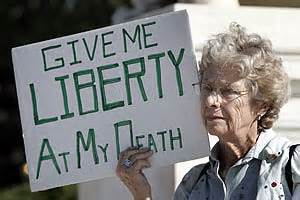
  • My Life, My Death, My Choice

    My Life, My Death, My Choice

    When I was five, my grandpa was in the hospital with diabetes and many other illnesses.

    His last few months were torture. I remember my mother saying that if he could speak, he would want the plug pulled to end his agony.

    I believe my mother hurt more watching him go through that pain than she did the day he was  gone. This is why the Death with Dignity Act in California was made, so that people and their families will not have to suffer like mine did. The act was passed on Monday, October 6, 2015.

    It is a controversial bill that allows self-euthanasia for terminally ill patients with six months to live.

    Patients can only do this if they are sure they want to end their lives. It requires patients to take the medication themselves; under the law, other people cannot administer the medicine.

    The patient must sign papers and have two doctors sign off on the decision with two witnesses present, one of whom must be not be related to the patient.

    I am not against this act, but I would honestly never use this act on myself, no matter the circumstances.

    Most who oppose this are religious and see assisted suicide as an intervention in God’s plan.

    The ones who side with me are typically nonreligious, and support the right to die. At the end of the day, it is the patient’s choice to live through the pain or end it.

  • Alabama Falls Behind California in Voting Rights

    California

    On Saturday, October 10, California Governor Jerry Brown signed into law The Motor Voter Act, a bill that automatically registers to vote any person on the day he receives or renews his driver’s license.

    The Motor Voter Act, sponsored by Secretary of State Alex Padilla, will hopefully reverse the record-low voter turnout from last November, which was a shocking forty-two percent.

    Before this act, only fifty-two percent of eligible voters ages 18 to 24 were registered to vote, an embarrassing statistic in a country where people died for the right to vote only fifty years ago.

    California is still behind Oregon, who now registers every person to vote on his/her eighteenth birthday.

    Padilla says about his measure, “Citizens should not be required to opt into their fundamental right to vote. We do not have to opt into other rights such as free speech or due process.”

    Alabama

    Alabama, on the other hand, is slipping back into the 1950s, a time when many were often barred from the polls by unjust, discriminatory laws.

    Alabama has closed 31 driver’s license offices, almost all in areas with large minority and poor populations.

    In Alabama, one is required to provide a federal- or state-issued ID when voting, and a driver’s license is the most common form used by voters.

    Residents will experience difficulty obtaining and renewing driver’s licenses, meaning these people will be unable to provide a valid ID when voting.

    Presidential candidate and former Secretary of State Hillary Clinton said about the law, “50 years after Rosa Parks sat and Dr. Martin Luther King Jr. marched and John Lewis bled, it is hard to believe we are back having this same debate about whether or not every American gets a chance to vote and exercise his rights.”

  • Cultural Appropriation: What’s the Big Deal?

    Cultural Appropriation: What’s the Big Deal?

    Now that Halloween is around the corner your local party supply store is stocking their shelves with your typical sexy nurse or hunky firefighter costumes. However, among these costumes you’re bound to find some that are accused of “cultural appropriation”.

    First off – What is cultural appropriation? Its become topic of controversy nowadays, especially with these “young internet activists” who are educated via tumblr.  Wikipedia defines cultural appropriation as, “a sociological concept, which views the adoption or use of elements of one culture by members of a different culture as a largely negative phenomenon.” In simpler terms, it is the mockery of people and their culture through the adoption of ideas associated with a culture outside their own. So your cute Tribal Spirit Tween costume, that can be seen as the appropriation of the Native American race and culture.

    I can only speak for myself, and the appropriation my own culture, but when I see these Mexican *Sombrero Included* costumes on the racks, I am not offended at all. I am 100% Mexican, and the Mexican culture is deeply embedded in my everyday life – so when I see these costumes all I see is ignorance in plastic bag. My culture is the holidays we celebrate, the music we listen to, the food we enjoy – it is not someone in a multi colored poncho, wearing a plastic sombrero.  I don’t see the point of being bothered by the ignorance of our extremely insensitive society. They are taking a complex culture and turning it into a stereotypical caricature. You are not dressing as a Mexican if you walk around with a sombrero and a mustache – you’re dressed in classical American Ignorance, head to toe.

    However, as I researched the topic for this article, I came across some valid points that offered a new light to the situation. Even though I still hold my previous beliefs, I still have some food for thought for you guys that enjoy “exotic” dressing.

    Many of these ethically-cultural-and racially based costumes are merely intended to be one of two things – exotic or funny. But the question I am asking is – what about these groups make them exotic or humorous?

    Our society associates normalcy with “Whiteness” and therefore everyone outside is foreign, weird, or funny. Some readers might think dressing up as a person of certain culture is justified on the grounds that it is all done, “as a joke” and “should not be taken seriously.” I am not insinuating that you are racist if you choose to wear these, or that you are doing it with an intention to directly hurt or discriminate against another race, (If you are, you are a horrible person). However, keep in mind – you can’t just “borrow” someone else’s identity for a day. Because guess what, perhaps unlike yourself you don’t have to live with the stigmas associated with that costume.

    This is why it is so dangerous to “dress up” as another race because once you take off your sombrero and poncho you don’t have to worry about anyone asking you about your citizenship, like they do to me.

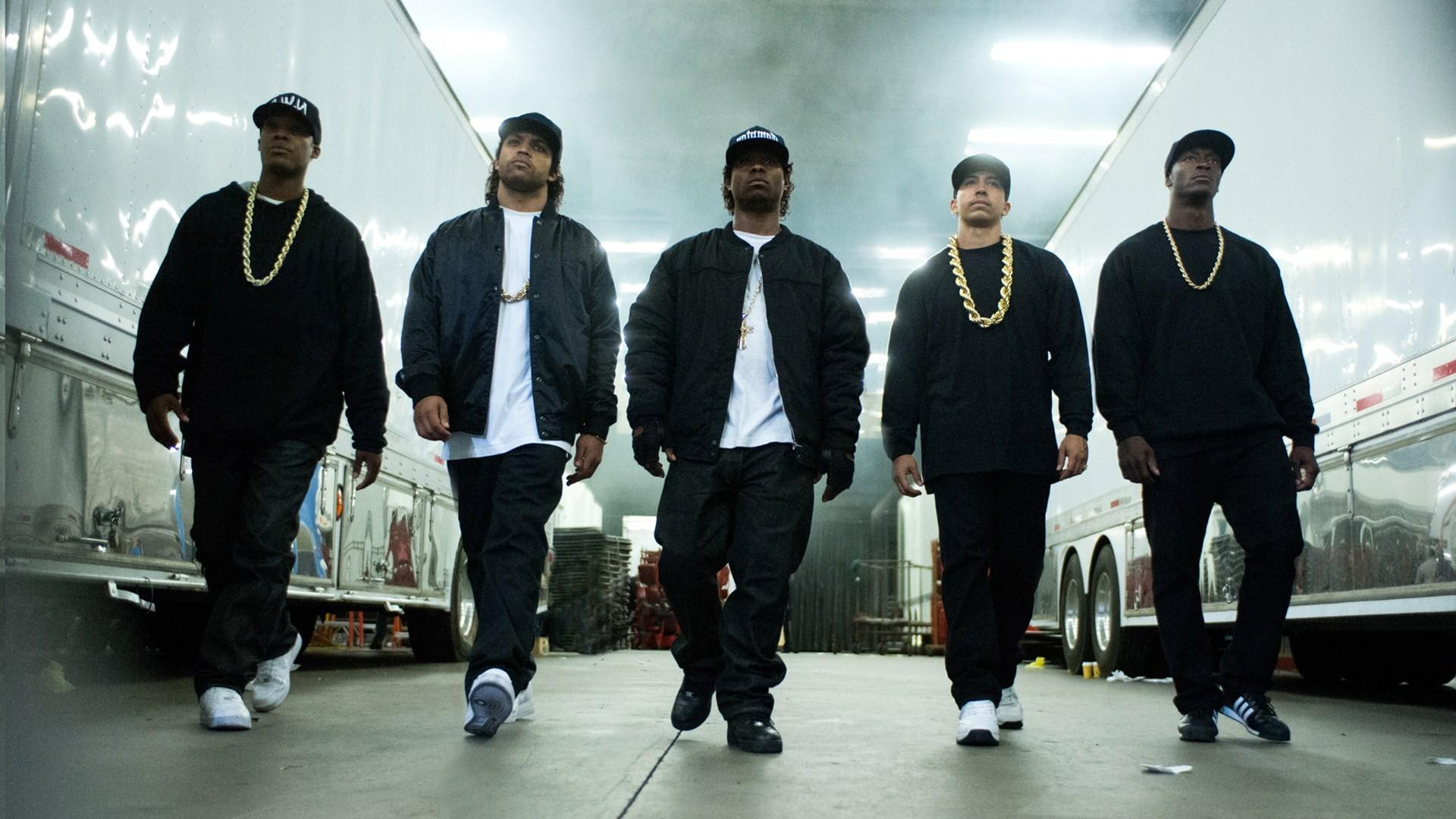
  • Straight Outta Compton

    Straight Outta Compton

    I’m always hesitant to see films dealing with racial oppression and subjugation because they always remind me of the stratification and prejudice that is my people’s reality. But what I experienced in theater number nine at the Pike Cinemark was something close to spiritual.

    Straight Outta Compton gives people a glimpse at what it is like to be a Black male trying to survive in a white man’s world in the 1980-90’s, today, and possibly forever.

    Those who deny police brutality, especially against minorities, need to watch the multiple times N.W.A. was harassed by the police—in front of their workplace, outside their own homes, and even at their own concert. All of these incidents were acts of white, male police officers asserting their power, and not the members of N.W.A. doing something illegal.

    The movie also deals with the case of Rodney King, a Black male who was brutally beaten by four L.A.P.D. officers in 1991. When all but one of the officers was acquitted despite video evidence, the oppressed minorities rioted in the streets of L.A., causing an estimated 1 billion dollars in property damage.

    The movie is still relevant today, twenty-five years later, because of the tendency history has to repeat itself. The Ferguson Riots of 2014-2015 started when officer Darren Wilson shot and killed the unarmed Black teenager Michael Brown. The riots escalated after the grand jury failed to charge Wilson with murder. Similar situations have popped up throughout the United States in recent years.

    The issues then and now are indistinguishable simply because we live in a Eurocentric world. “A system cannot fail those it was never meant to protect,” stated W.E.B. DuBois, the late Black activist. So to those who speak of victimization and racism being over and “not a prevalent issue today,” I say this: hell na.

  • Land of the Free, Home of the Christians

    L’shanah tovah! Or to all that do not speak Hebrew, “to a good year,” because it’s Rosh Hashanah, the Jewish New Year, once again.

    This two-day Jewish holiday is known as the Day of Judgment, and is celebrated all over the world for people to reflect on what they need to change to become better human beings. It has been questioned whether Rosh Hashanah, along with the Jewish holiday Yom Kippur, should be school holidays.

    In Jewish tradition, it is prohibited to work during the two days of Rosh Hashanah, yet in the U.S., teachers and students are expected to be in attendance during those days of celebration and worship. In the nation of religious freedom, it is ridiculous that our school district doesn’t give the two days off to respect our teachers, staff, and students of the Jewish faith.

    Others might say that religion isn’t important in school. But in a country where children too young to understand what they’re saying are forced to recite the Pledge of Allegiance, which includes the line “one nation under God,” we are lying to ourselves if we think school and religion are separated.

    Every year, we receive one week off for the religious holiday Christmas, a week for the nonreligious New Year, and another week for the religious holiday Easter.

    It shouldn’t matter how many people identify with Judaism, Jewish students and teachers should be allowed to have the two days off to celebrate their new beginnings.